Learn how GST billing software helps businesses generate tax invoices, calculate GST, manage sales records and organize transactions. Explore important features and benefits for retailers, restaurants and small businesses.
In this article
- What Is GST Billing Software?
- Why Do Businesses Need GST Billing Software?
- Understanding Different GST Tax Components
- 1. CGST – Central Goods and Services Tax
- 2. SGST – State Goods and Services Tax
- 3. IGST – Integrated Goods and Services Tax
- Important Features of GST Billing Software
- 1. GST Invoice Generation
- 2. Automatic GST Calculation
- 3. Product and Tax Configuration
- 4. Customer Management
- 5. Sales and Invoice History
- 6. Purchase and Supplier Records
- 7. Sales Reports
- 8. Invoice Printing and Sharing
- What Information Should a GST Invoice Include?
- Benefits of GST Billing Software for Small Businesses
- Who Should Use GST Billing Software?
- Retail Stores
- Restaurants and Cafes
- Wholesalers and Distributors
- Service-Based Businesses
- How to Choose the Right GST Billing Software?
- How EasyBillMatic Helps Businesses with Digital Billing
- Frequently Asked Questions
- 1. What is GST billing software?
- 2. Is GST billing software necessary for small businesses?
- 3. What is the difference between CGST, SGST, and IGST?
- 4. Can GST billing software calculate tax automatically?
- 5. What is GSTIN?
- 6. Can GST billing software generate invoices for retail businesses?
- 7. Does GST billing software automatically file GST returns?
- Conclusion
GST billing software helps businesses generate tax invoices, calculate applicable GST, maintain sales records, organize transactions, and simplify billing operations. Instead of preparing invoices manually, businesses can use digital billing tools to calculate taxes, record transactions, and maintain organized business documents.
Whether you operate a retail shop, supermarket, restaurant, wholesale business, or service-based company, choosing a suitable billing solution can make everyday invoicing and tax record management easier.
What Is GST Billing Software?
GST billing software is a digital invoicing solution that helps businesses generate invoices containing applicable Goods and Services Tax details. It can calculate tax amounts based on configured tax rates, maintain transaction records, and organize customer and product information.
GST stands for Goods and Services Tax. It is an indirect tax system applicable to the supply of goods and services in India.
Businesses that are required to comply with GST regulations need appropriate invoicing and record-keeping processes. Digital billing software can help organize these activities and reduce repetitive manual calculations.
Why Do Businesses Need GST Billing Software?
Preparing invoices manually can become difficult when a business handles multiple products, customers, tax rates, and daily transactions.
A digital billing solution helps businesses:
- Generate organized tax invoices.
- Calculate configured GST amounts.
- Maintain customer and supplier records.
- Record sales transactions.
- Organize invoice history.
- Reduce manual billing calculations.
- Maintain business transaction records.
Using a suitable system can make billing more consistent and help businesses organize information required for accounting and tax-related activities.
Understanding Different GST Tax Components
Businesses should understand the main GST components when configuring their invoices.
1. CGST – Central Goods and Services Tax
CGST is the central component of GST generally applicable to intra-state supplies of goods and services, along with SGST or UTGST as applicable.
2. SGST – State Goods and Services Tax
SGST is the state component generally applicable to intra-state supplies. It is collected alongside CGST when the applicable transaction is within the same state.
3. IGST – Integrated Goods and Services Tax
IGST generally applies to inter-state supplies and certain other transactions covered under GST law. It is administered under the integrated GST framework.
The applicable tax treatment depends on the nature of the transaction, place of supply, and relevant GST provisions.
Important Features of GST Billing Software
1. GST Invoice Generation
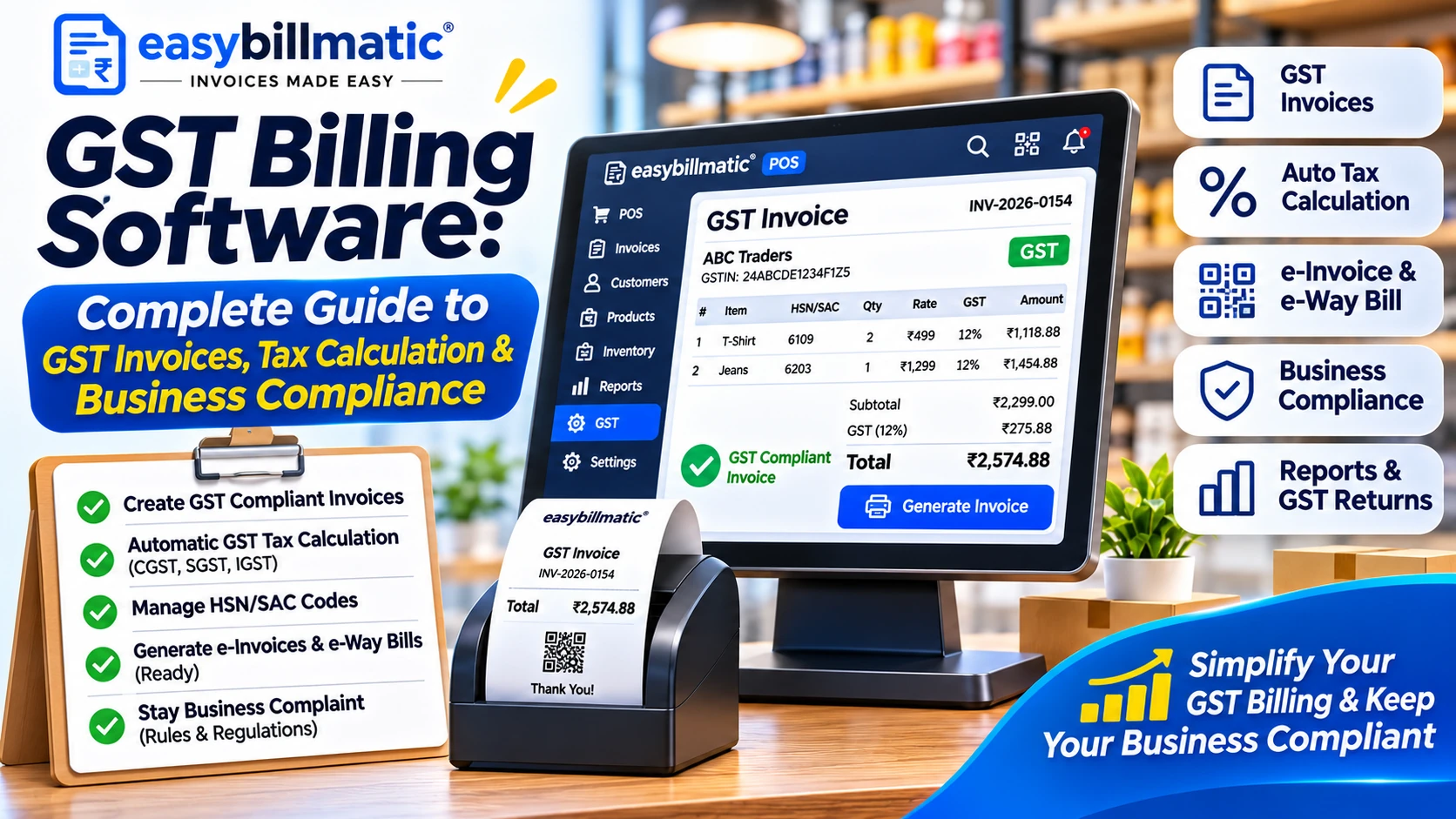
Invoice generation is one of the primary functions of GST billing software. Businesses can create customer invoices with relevant business details, product information, quantities, prices, and configured tax details.
A suitable invoicing system should support the invoice fields required for the applicable transaction type and business requirements.
2. Automatic GST Calculation
Digital billing systems can calculate tax amounts using configured tax rates. This reduces the need for employees to calculate every invoice manually.
For example, if a taxable product value is ₹1,000 and an illustrative GST rate of 18% applies, the tax amount is ₹180 and the total becomes ₹1,180.
Actual tax rates must be determined according to the product or service classification and applicable GST rules.
3. Product and Tax Configuration
Businesses may sell products or services with different applicable tax rates. A suitable billing system allows users to maintain product information and configure the relevant tax details.
Correct configuration helps ensure that invoices use the appropriate tax settings.
4. Customer Management
Customer management helps maintain customer names, contact details, billing addresses, and applicable GSTIN information.
Organized customer records make it easier to prepare invoices and review previous transactions.
5. Sales and Invoice History
Maintaining invoice history helps businesses review previous sales, identify transactions, and retrieve billing information when required.
Digital records can also make it easier to share invoice information with accountants and authorized business personnel.
6. Purchase and Supplier Records
Businesses need to organize purchases and supplier transactions alongside sales invoices. Purchase management helps maintain supplier information, purchase dates, product quantities, and invoice details.
7. Sales Reports
Sales reports provide an overview of business transactions during selected periods. Business owners can review sales totals, invoice records, and other available financial information.
8. Invoice Printing and Sharing
Suitable billing solutions allow businesses to print invoices using compatible printers or share digital invoice documents with customers.
This makes it easier to provide customers with organized transaction records.
What Information Should a GST Invoice Include?
A GST tax invoice must contain the applicable particulars prescribed under GST law. Depending on the transaction, these can include:
- Supplier's name, address, and GSTIN.
- A consecutive invoice number and invoice date.
- Recipient details, including GSTIN or UIN where applicable.
- HSN or SAC details, as applicable.
- Description of goods or services.
- Quantity and unit details where relevant.
- Total value and taxable value.
- Applicable tax rates and tax amounts.
- Place of supply for applicable transactions.
- Delivery address where applicable.
- Other particulars required under the applicable GST rules.
Invoice requirements can differ depending on the transaction and type of registered business. Businesses should verify the applicable requirements before issuing invoices.
Benefits of GST Billing Software for Small Businesses
- Faster Invoicing: Generate customer invoices without preparing every bill manually.
- Consistent Tax Calculations: Calculate configured GST amounts automatically.
- Organized Records: Maintain invoice and transaction histories.
- Reduced Manual Errors: Minimize repetitive calculations and data entry mistakes.
- Better Customer Management: Maintain customer and billing information.
- Improved Business Visibility: Review sales and available transaction reports.
- Efficient Documentation: Print or share invoices through supported workflows.
Who Should Use GST Billing Software?
Retail Stores
Grocery shops, supermarkets, clothing stores, electronics shops, and other retailers can use digital invoicing tools to organize daily sales and tax invoice records.
Restaurants and Cafes
Restaurants, cafes, bakeries, and food businesses can use billing systems to generate customer invoices and maintain sales records according to their applicable tax requirements.
Wholesalers and Distributors
Wholesale businesses frequently manage multiple suppliers, customers, products, and invoices. Digital billing solutions can help organize these transactions.
Service-Based Businesses
Service providers can use suitable invoicing systems to prepare bills for services and maintain customer transaction records.
How to Choose the Right GST Billing Software?
Before selecting a billing solution, evaluate your business requirements and the features offered by the software.
- GST invoice generation.
- Flexible tax configuration.
- Product and service management.
- Customer and supplier records.
- Sales and purchase management.
- Invoice history and reporting.
- Thermal printer and invoice printing support.
- Data backup and security.
- Ease of use for employees.
- Pricing and technical support.
Also verify whether the software supports the GST reporting, return preparation, e-invoicing, or e-way bill workflows your business requires. Not every billing application automatically provides every compliance feature.
How EasyBillMatic Helps Businesses with Digital Billing
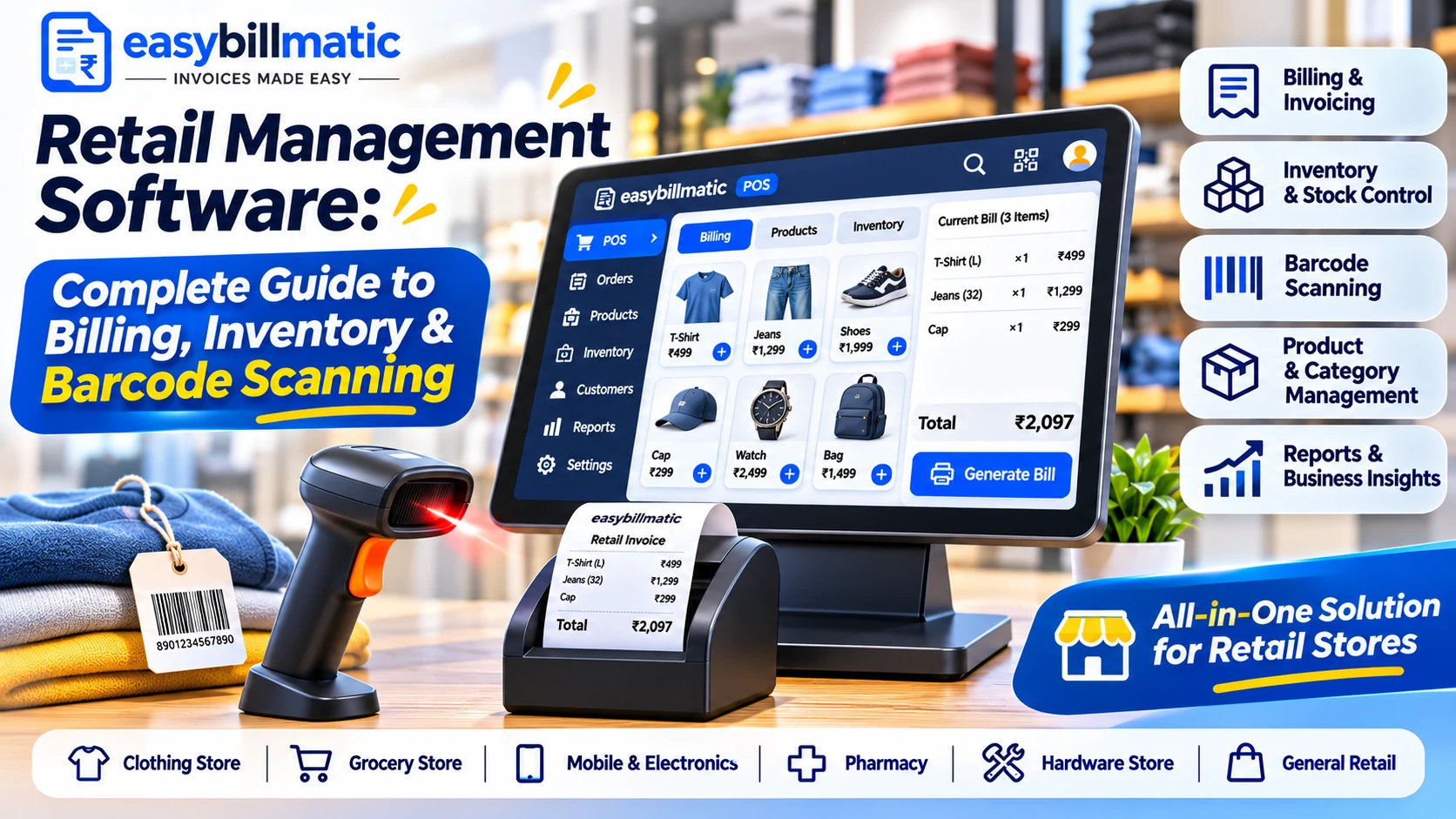
EasyBillMatic provides POS billing solutions designed to help retail and restaurant businesses organize their daily sales and billing operations.
Businesses can explore available capabilities such as:
- Digital POS billing and invoice generation.
- Product and category management.
- Retail and restaurant billing workflows.
- Sales transaction management.
- Purchase and supplier management.
- Customer information management.
- Thermal receipt printing support.
- Business sales reports.
By organizing billing and business records through a digital platform, business owners can simplify everyday transactions and reduce dependence on manual billing processes.
Explore EasyBillMatic POS solutions to learn more about digital billing for retail and restaurant businesses.
Frequently Asked Questions
1. What is GST billing software?
GST billing software is a digital solution used to create tax invoices, calculate configured GST amounts, maintain sales records, and organize business transactions.
2. Is GST billing software necessary for small businesses?
Digital billing software can be useful for small businesses that need to generate invoices, organize transaction records, and manage billing efficiently. Whether GST registration or a particular invoice format is legally required depends on the applicable GST provisions and business circumstances.
3. What is the difference between CGST, SGST, and IGST?
CGST and SGST generally apply together to intra-state supplies, while IGST generally applies to inter-state supplies and other transactions covered by the integrated GST framework.
4. Can GST billing software calculate tax automatically?
Many billing systems can calculate tax using configured tax rates. Businesses must ensure that product classifications and tax configurations are correct.
5. What is GSTIN?
GSTIN stands for Goods and Services Tax Identification Number. It is the identification number assigned to a registered taxpayer under the GST system.
6. Can GST billing software generate invoices for retail businesses?
Yes. Suitable billing applications can generate invoices for retail transactions, subject to the software's features and applicable invoice requirements.
7. Does GST billing software automatically file GST returns?
Not necessarily. Invoice generation and GST return filing are different functions. Check whether the software offers return preparation, filing integration, or other required compliance features.
Conclusion
GST billing is an important part of business invoicing and transaction management in India. Businesses need organized billing processes to generate appropriate invoices, maintain transaction records, and manage applicable tax information.
The right digital billing solution can simplify invoice generation, tax calculations, and everyday sales management.
Visit EasyBillMatic to explore POS billing solutions for your retail or restaurant business.